Cross Chain Interoperability: Why It Matters for Blockchain in 2026
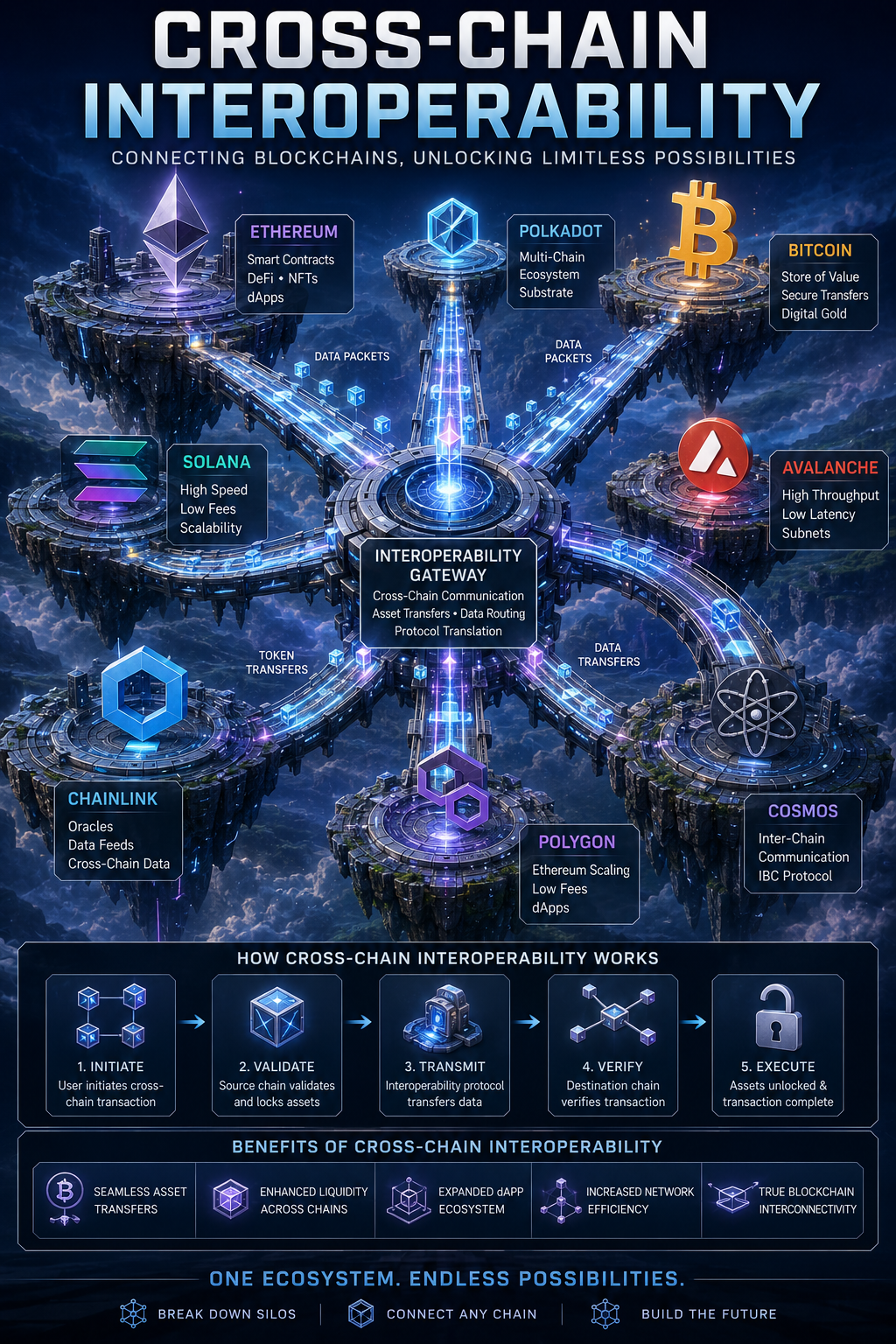
Blockchain technology has transformed digital finance, decentralized applications, and online ownership. However, one major challenge remains: most blockchain networks operate independently. This is where Cross Chain Interoperability becomes increasingly important.
Cross Chain Interoperability allows different blockchain networks to communicate, exchange data, and transfer assets efficiently. As a result, users can move value between ecosystems without relying entirely on centralized intermediaries.
In this guide, we explain how Cross Chain Interoperability works, its benefits, major projects, risks, and why it may become one of the most important technologies in Web3.
What Is Cross Chain Interoperability?
Cross Chain Interoperability refers to the ability of different blockchain networks to interact with one another.
Traditionally, blockchains such as Bitcoin, Ethereum, Solana, and Avalanche operate separately. Consequently, assets and information often remain confined within individual ecosystems.
However, Cross Chain Interoperability creates connections between networks, enabling communication and asset transfers across multiple blockchains.
This capability supports a more connected and efficient blockchain ecosystem.
Why Cross Chain Interoperability Is Important
The blockchain industry continues to expand rapidly.
As new networks emerge, fragmentation becomes a challenge. Therefore, Cross Chain Interoperability helps solve several key problems:
- Improved blockchain connectivity
- Better asset mobility
- Greater liquidity
- Enhanced user experience
- Reduced ecosystem fragmentation
- Increased developer flexibility
Furthermore, interoperability encourages collaboration among blockchain communities.
How Cross Chain Interoperability Works
Several technologies support interoperability between blockchains.
Blockchain Bridges
Bridges allow assets to move from one blockchain to another.
For example, a user may transfer tokens from Ethereum to another network through a bridge.
Cross Chain Messaging
Protocols can transmit information between separate blockchains.
As a result, decentralized applications can interact across ecosystems.
Shared Security Systems
Some interoperability solutions use shared security frameworks to improve trust and efficiency.
Interoperability Protocols
Specialized protocols coordinate communication between multiple networks.
Consequently, Cross Chain Interoperability creates a more unified blockchain environment.
Benefits of Cross Chain Interoperability
Cross Chain Interoperability offers several advantages.
Improved Liquidity
Assets can move more freely between blockchain ecosystems.
Better User Experience
Users no longer need to remain locked into a single network.
Enhanced Innovation
Developers can build applications that interact with multiple blockchains.
Stronger Ecosystem Growth
Blockchain networks can cooperate rather than compete in isolation.
Greater Capital Efficiency
Users can access opportunities across different ecosystems.
Therefore, Cross Chain Interoperability supports a more flexible Web3 economy.
Leading Projects Supporting Cross Chain Interoperability
Several projects are helping advance interoperability.
Polkadot
Polkadot enables multiple blockchains to communicate through a shared network architecture.
The platform uses parachains to support specialized blockchain ecosystems.
Cosmos
Cosmos focuses on creating an Internet of Blockchains.
Its Inter-Blockchain Communication (IBC) protocol enables blockchain networks to exchange information securely.
Chainlink CCIP
Chainlink’s Cross-Chain Interoperability Protocol (CCIP) helps connect smart contracts across multiple blockchains.
As a result, developers can build more advanced decentralized applications.
LayerZero
LayerZero provides infrastructure for omnichain applications.
The protocol helps facilitate communication across different blockchain environments.
These projects demonstrate the growing importance of Cross Chain Interoperability within Web3.
Cross Chain Interoperability and DeFi
Decentralized finance benefits significantly from interoperability.
Without Cross Chain Interoperability, liquidity often remains fragmented across different ecosystems.
However, interoperability allows:
- Cross-chain lending
- Cross-chain borrowing
- Multi-chain liquidity pools
- Decentralized asset transfers
Consequently, DeFi applications become more efficient and accessible.
Cross Chain Interoperability and NFTs
The NFT industry also benefits from interoperability.
Artists and collectors increasingly want digital assets that function across multiple blockchains.
Cross Chain Interoperability may allow NFTs to move between ecosystems while preserving ownership records and functionality.
As adoption grows, interoperability could support broader NFT utility.
Risks of Cross Chain Interoperability
Although the technology offers significant benefits, there are challenges to consider.
Security Risks
Bridges have historically been targets for cyberattacks.
Technical Complexity
Cross-chain systems are more complicated than single-chain applications.
Regulatory Uncertainty
Governments continue evaluating blockchain regulations.
Network Dependence
Interoperability often relies on multiple interconnected systems.
Therefore, developers must prioritize security and reliability.
The Future of Cross Chain Interoperability
The future appears promising for Cross Chain Interoperability.
As blockchain adoption expands, users increasingly expect seamless interaction between networks.
Moreover, developers continue creating advanced interoperability protocols that improve efficiency and security.
Many analysts believe the next phase of Web3 growth will depend heavily on connected blockchain ecosystems.
Consequently, Cross Chain Interoperability may become a foundational component of decentralized infrastructure.
How to Evaluate Interoperability Projects
Before investing or participating, consider the following factors:
Security
Review audits and security mechanisms.
Adoption
Evaluate network usage and ecosystem growth.
Technology
Understand how interoperability is achieved.
Development Activity
Monitor ongoing improvements and innovation.
Long-Term Vision
Assess whether the project solves a meaningful industry problem.
These factors can help users identify promising interoperability solutions.
Cross Chain Interoperability and the Future of Web3
Web3 aims to create an open and connected digital economy.
However, isolated blockchain networks can limit this vision.
Cross Chain Interoperability helps overcome these barriers by enabling communication, collaboration, and value transfer across ecosystems.
As blockchain technology matures, interoperability may become as important as scalability and security.
PolkadotCosmosChainlink CCIP