Web3 Gaming Explained: How Blockchain Games Are Evolving in 2026
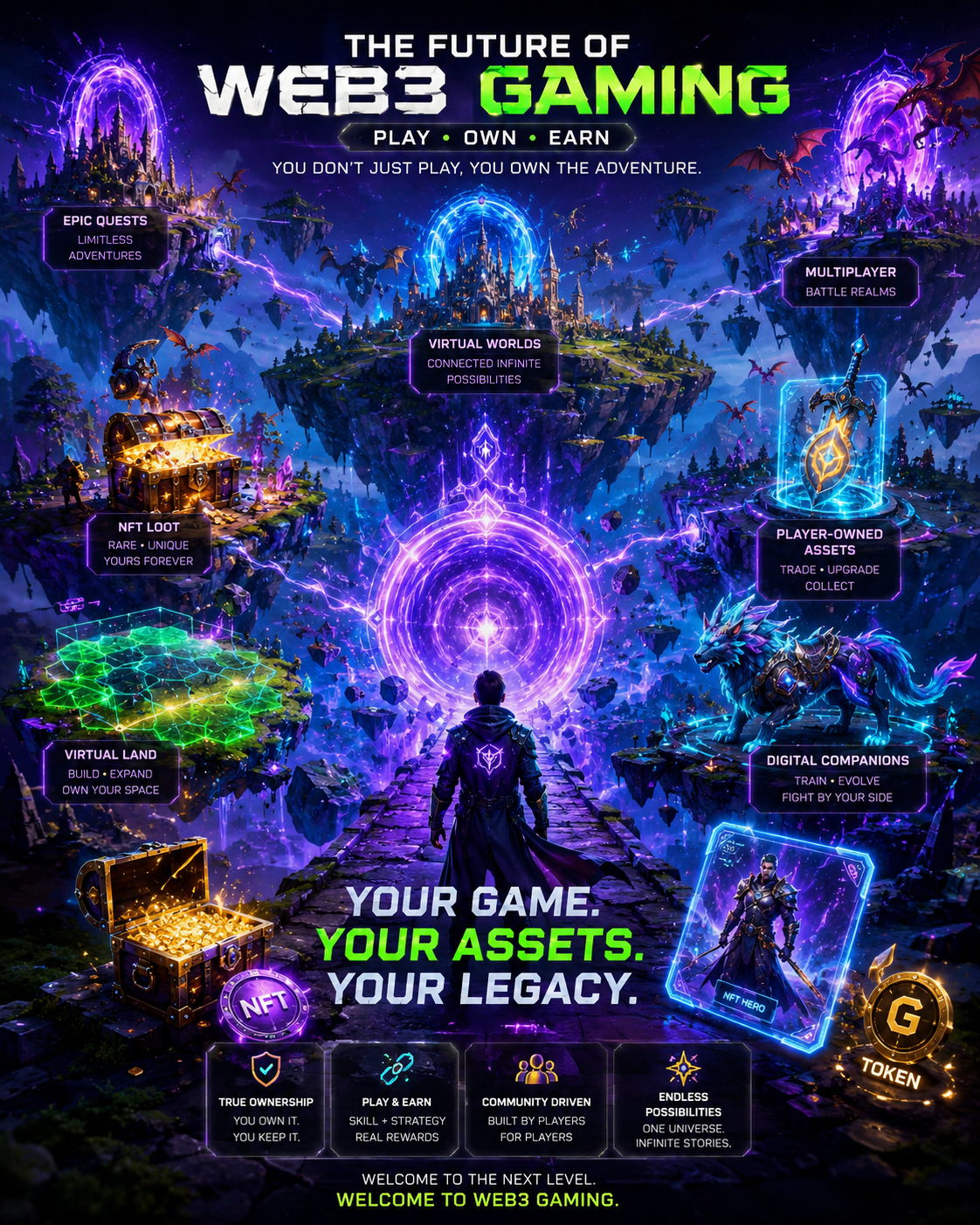
The gaming industry has undergone significant changes over the past decade. From mobile gaming to cloud gaming, innovation continues to reshape how players interact with digital worlds. Today, Web3 Gaming is emerging as one of the most exciting developments in the industry.
Unlike traditional games, Web3 Gaming integrates blockchain technology, digital ownership, decentralized economies, and player-controlled assets. As a result, gamers can own, trade, and monetize in-game items in ways that were previously impossible.
In this guide, we explore how Web3 Gaming works, its benefits, challenges, major projects, and why it may play a major role in the future of entertainment.
What Is Web3 Gaming?
Web3 Gaming refers to video games that utilize blockchain technology to give players ownership of digital assets.
In traditional games, items such as skins, weapons, characters, and currencies are controlled by game publishers. However, Web3 Gaming allows these assets to exist on blockchain networks where players maintain ownership.
As a result, gamers gain greater control over their virtual possessions.
Furthermore, blockchain technology enables transparent economies and secure transactions within gaming ecosystems.
Why Web3 Gaming Is Important
The traditional gaming model has limitations.
Players often spend money on digital items without actually owning them. If a game shuts down, those assets may disappear permanently.
Web3 Gaming addresses these challenges by offering:
- True digital ownership
- Transparent economies
- Player-driven marketplaces
- Cross-platform asset potential
- New earning opportunities
- Decentralized participation
Therefore, Web3 Gaming creates a more player-focused gaming experience.
How Web3 Gaming Works
Several technologies support Web3 Gaming ecosystems.
Blockchain Networks
Gaming assets are stored on blockchain networks rather than centralized servers.
NFTs
Non-fungible tokens represent unique in-game assets such as characters, weapons, and collectibles.
Smart Contracts
Smart contracts automate transactions and game mechanics.
Digital Wallets
Players use crypto wallets to store and manage their assets.
Consequently, Web3 Gaming provides a more open and transparent environment.
Digital Ownership in Web3 Gaming
One of the biggest advantages of Web3 Gaming is digital ownership.
Players can own:
- Characters
- Virtual land
- Collectibles
- Weapons
- Skins
- Game currencies
Unlike traditional games, these assets can often be traded outside the game environment.
As a result, players gain greater flexibility and control.
Play-to-Earn and Web3 Gaming
Play-to-earn models have become closely associated with Web3 Gaming.
In these systems, players can earn rewards through gameplay activities.
Examples include:
- Completing quests
- Winning tournaments
- Collecting rare items
- Participating in virtual economies
Therefore, Web3 Gaming introduces new opportunities for engagement and monetization.
Major Web3 Gaming Projects
Several projects are helping drive adoption.
Axie Infinity
Axie Infinity helped popularize blockchain gaming and play-to-earn mechanics.
The Sandbox
The Sandbox allows users to create, own, and monetize virtual experiences.
Decentraland
Decentraland offers a virtual world where users can buy land and interact with digital environments.
Illuvium
Illuvium combines blockchain technology with high-quality gaming experiences.
These projects demonstrate the growing diversity within Web3 Gaming.
Benefits of Web3 Gaming
There are several reasons why Web3 Gaming continues attracting attention.
True Asset Ownership
Players maintain control over their digital assets.
Open Marketplaces
Assets can often be traded freely.
Community Participation
Many games involve community governance.
Economic Opportunities
Players may earn rewards through participation.
Innovation
Blockchain technology enables new game mechanics and experiences.
Consequently, Web3 Gaming offers advantages for both players and developers.
Challenges Facing Web3 Gaming
Despite its potential, Web3 Gaming faces several obstacles.
Scalability
Blockchain networks must support large numbers of users.
User Experience
Wallets and blockchain interactions can be complex.
Regulation
Governments continue evaluating digital asset regulations.
Market Volatility
Cryptocurrency prices can affect gaming economies.
Adoption
Many mainstream gamers remain unfamiliar with blockchain technology.
Therefore, the industry must continue improving accessibility.
Web3 Gaming and the Metaverse
The metaverse concept is closely connected to Web3 Gaming.
Virtual worlds may eventually allow assets to move between multiple platforms.
For example, a digital collectible earned in one game could potentially be used in another compatible environment.
As interoperability improves, Web3 Gaming could become a foundation for future virtual economies.
The Future of Web3 Gaming
The future appears promising for Web3 Gaming.
Game developers continue exploring new ways to integrate blockchain technology while improving gameplay experiences.
Furthermore, advancements in scalability, interoperability, and user interfaces are making blockchain gaming more accessible.
Many analysts believe the next generation of online entertainment may combine gaming, social interaction, digital ownership, and decentralized economies.
Consequently, Web3 Gaming could become one of the most influential sectors within the blockchain industry.
How to Evaluate Web3 Gaming Projects
Before participating in a blockchain game, consider the following factors:
Gameplay Quality
Strong gameplay remains essential.
Community Activity
Active communities often support long-term growth.
Development Team
Evaluate the team’s experience and reputation.
Economic Design
Sustainable reward systems are important.
Asset Utility
Digital assets should have meaningful use cases.
These factors can help identify promising projects.
Web3 Gaming and the Future of Entertainment
Entertainment continues evolving through technology.
Web3 Gaming represents a shift toward greater player ownership, decentralized economies, and digital freedom.
As blockchain adoption grows, gaming may become one of the largest sectors driving mainstream Web3 adoption.
Furthermore, new innovations could create experiences that are impossible within traditional gaming environments.
The SandboxDecentralandIlluvium