Crypto ETF Guide: Everything Investors Need to Know in 2026
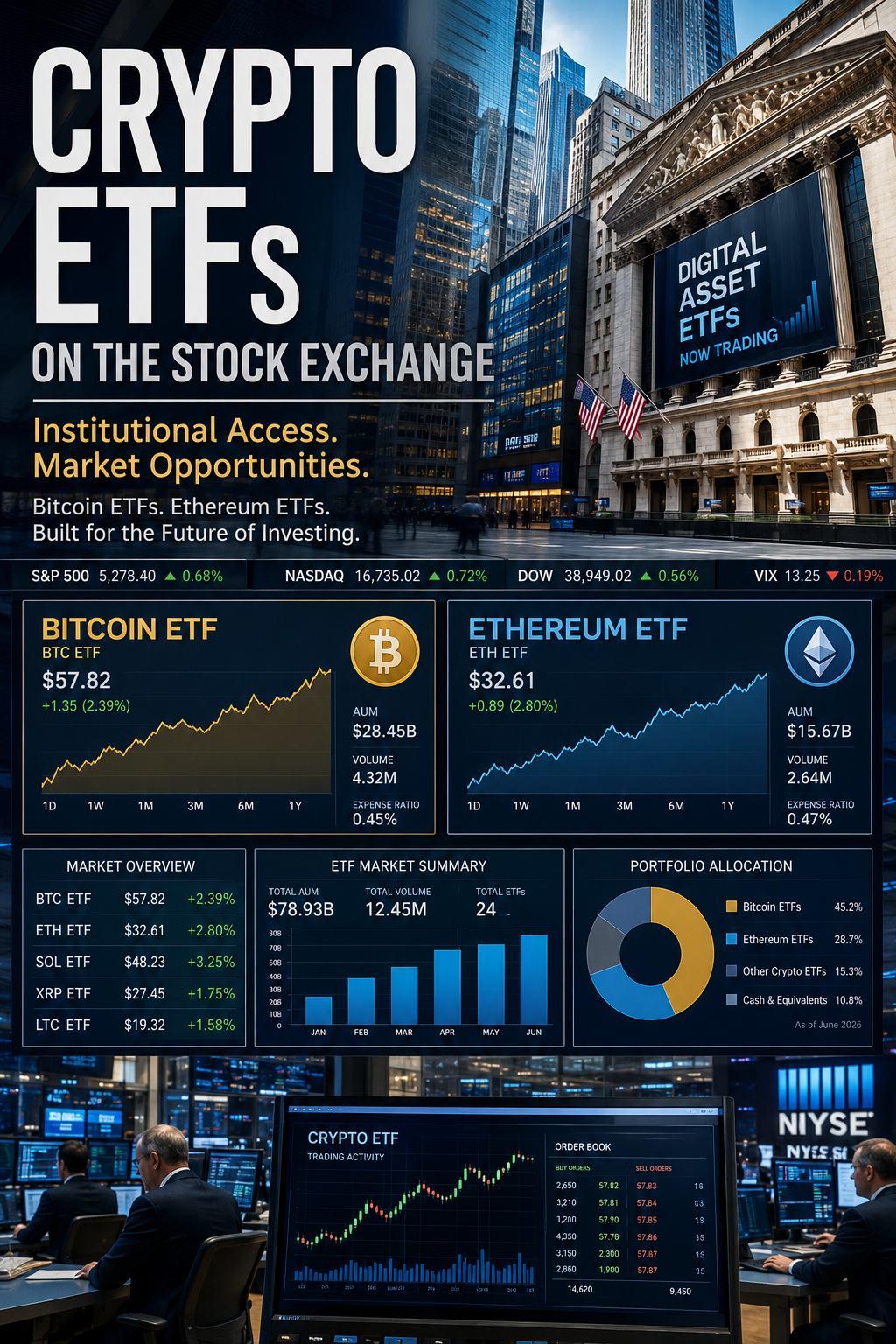
Cryptocurrency investing has evolved significantly over the past decade. While many investors still purchase digital assets directly through exchanges, others are turning to exchange-traded funds for easier exposure. As a result, the Crypto ETF Guide has become an important topic for both beginner and experienced investors.
Crypto ETFs provide a way to invest in cryptocurrency markets without directly managing digital wallets or private keys. Furthermore, they allow investors to gain exposure to Bitcoin, Ethereum, and other digital assets through traditional brokerage accounts.
In this Crypto ETF Guide, we explain how crypto ETFs work, their benefits, risks, and why they are becoming increasingly popular in 2026.
What Is a Crypto ETF?
A crypto ETF, or exchange-traded fund, is an investment product that tracks the performance of one or more cryptocurrencies.
Instead of buying cryptocurrency directly, investors purchase shares of the ETF. Consequently, they gain exposure to the underlying asset without handling the technical aspects of crypto ownership.
Many investors use crypto ETFs because they simplify access to digital asset markets.
Why Investors Are Interested in Crypto ETFs
Several factors have contributed to the growing popularity of crypto ETFs.
Simplicity
Investors can buy ETF shares through traditional brokerage platforms.
Regulation
Many crypto ETFs operate within established regulatory frameworks.
Accessibility
Crypto ETFs allow participation without requiring cryptocurrency wallets.
Portfolio Diversification
Investors can add digital assets to traditional investment portfolios.
Therefore, this Crypto ETF Guide highlights why ETFs appeal to a wide range of market participants.
Types of Crypto ETFs
There are several types of crypto ETFs available today.
Spot Bitcoin ETFs
Spot Bitcoin ETFs directly hold Bitcoin as the underlying asset.
As a result, their performance closely follows Bitcoin’s market price.
Ethereum ETFs
Ethereum ETFs provide exposure to Ethereum and its ecosystem.
These funds have gained popularity as Ethereum adoption continues to grow.
Futures-Based ETFs
Futures ETFs track cryptocurrency futures contracts rather than holding the asset itself.
While they provide exposure, performance may differ from spot markets.
Multi-Asset Crypto ETFs
Some ETFs offer diversified exposure to multiple digital assets.
Consequently, investors can reduce concentration risk.
How Crypto ETFs Work
Understanding ETF operations is an important part of any Crypto ETF Guide.
The process generally works as follows:
Fund Creation
An asset management company launches the ETF.
Asset Acquisition
The fund purchases cryptocurrencies or related financial instruments.
Share Issuance
ETF shares are created and listed on stock exchanges.
Trading
Investors buy and sell shares throughout the trading day.
As a result, crypto ETFs combine the convenience of traditional finance with cryptocurrency exposure.
Benefits of Crypto ETFs
There are several reasons why investors choose crypto ETFs.
Easier Access
Investors can use familiar brokerage accounts.
Improved Security
ETF providers handle asset custody and security.
Regulatory Oversight
Many ETFs operate under financial regulations.
Tax Reporting
Tax reporting may be simpler compared to direct cryptocurrency ownership.
Institutional Participation
ETFs make it easier for institutions to enter the crypto market.
Therefore, many investors view ETFs as a practical entry point into digital assets.
Risks of Crypto ETFs
Although ETFs offer benefits, they also involve risks.
Market Volatility
Cryptocurrency prices remain highly volatile.
Management Fees
ETFs charge fees that can reduce returns.
Tracking Differences
Some ETFs may not perfectly track cryptocurrency prices.
Regulatory Changes
Government policies can impact ETF markets.
Consequently, investors should understand the risks before investing.
Bitcoin ETFs and Their Impact
Bitcoin ETFs have played a major role in mainstream cryptocurrency adoption.
By providing regulated access to Bitcoin, these funds have attracted retail and institutional investors alike.
Furthermore, Bitcoin ETFs have increased market visibility and improved investor confidence.
Many analysts believe Bitcoin ETFs will continue driving adoption in the years ahead.
Ethereum ETFs and Growing Demand
Ethereum ETFs are becoming increasingly important as decentralized applications and smart contracts expand.
Ethereum serves as the foundation for many blockchain ecosystems. Therefore, investors are interested in gaining exposure through regulated investment products.
As Ethereum adoption grows, ETF demand may continue increasing.
Crypto ETFs vs Direct Cryptocurrency Ownership
A complete Crypto ETF Guide should compare ETFs with direct ownership.
Advantages of ETFs
- Simpler investing
- Professional custody
- Regulatory oversight
- Easy portfolio integration
Advantages of Direct Ownership
- Full control of assets
- Access to staking opportunities
- Participation in decentralized finance
- Greater flexibility
Consequently, the best choice depends on individual investment goals.
How to Choose a Crypto ETF
Before investing, consider the following factors:
Asset Exposure
Determine whether the ETF tracks Bitcoin, Ethereum, or multiple assets.
Fees
Review management and operating costs.
Liquidity
Higher liquidity can improve trading efficiency.
Fund Reputation
Choose reputable asset managers whenever possible.
Regulatory Status
Understand the legal framework governing the ETF.
These considerations can help investors make informed decisions.
The Future of Crypto ETFs
The future appears promising for crypto ETFs.
Financial institutions continue expanding cryptocurrency offerings. Moreover, regulatory clarity is improving in many regions.
As adoption increases, analysts expect more investment products covering various blockchain sectors.
Future ETFs may include:
- DeFi-focused funds
- AI crypto funds
- Blockchain infrastructure ETFs
- Web3 investment products
Consequently, the ETF market could become a major gateway to digital asset investing.
BlackRockGrayscaleFidelity