Ethereum Restaking Explained: The Next Evolution of Staking in 2026
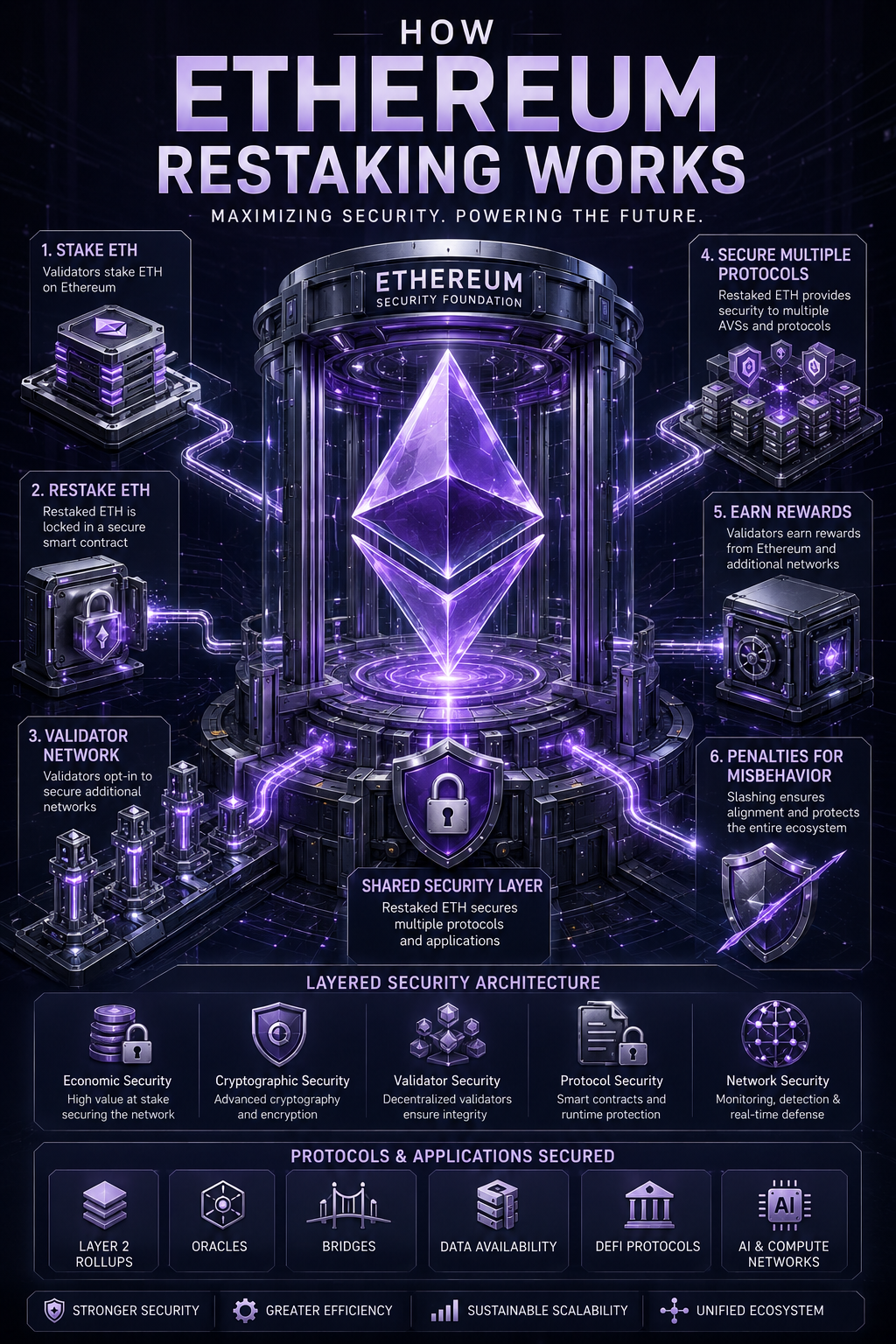
Ethereum remains the leading smart contract blockchain, supporting thousands of decentralized applications, DeFi platforms, and Web3 projects. As the network continues to evolve, Ethereum Restaking has emerged as one of the most important innovations within the ecosystem.
Ethereum Restaking allows users to reuse their staked ETH to secure additional protocols and services. As a result, participants can potentially earn extra rewards while contributing to broader blockchain security.
In this guide, we explore how Ethereum Restaking works, its advantages, risks, and why many analysts believe it could play a major role in the future of Ethereum.
What Is Ethereum Restaking?
Ethereum Restaking is a mechanism that allows staked ETH to be used for securing multiple networks or services simultaneously.
Traditionally, users stake ETH to help secure the Ethereum blockchain and earn staking rewards. However, Ethereum Restaking extends this concept by allowing the same staked assets to provide security for additional decentralized applications and infrastructure.
Consequently, users can potentially increase capital efficiency without needing additional collateral.
Why Ethereum Restaking Is Important
The blockchain industry increasingly relies on decentralized infrastructure and security services.
Ethereum Restaking helps address several challenges:
- Improved capital efficiency
- Enhanced network security
- Additional reward opportunities
- Stronger ecosystem growth
- Better utilization of staked assets
Furthermore, Ethereum Restaking creates economic incentives that encourage participation in the broader Ethereum ecosystem.
How Ethereum Restaking Works
The process is relatively straightforward.
Step 1: Stake ETH
Users stake ETH through Ethereum validators or liquid staking platforms.
Step 2: Delegate Security
The staked ETH can then be used to secure additional protocols.
Step 3: Earn Rewards
Participants receive staking rewards and may earn extra incentives from supported services.
Step 4: Support Ecosystem Growth
The additional security helps emerging blockchain services operate more effectively.
As a result, Ethereum Restaking creates a new layer of shared security across multiple applications.
The Role of EigenLayer
EigenLayer is currently one of the most recognized platforms driving Ethereum Restaking adoption.
The protocol allows users to restake ETH and extend Ethereum’s security to additional services known as Actively Validated Services (AVSs).
Because of its innovative approach, EigenLayer has attracted significant attention from developers and investors.
Key Features
- Shared security model
- Additional reward opportunities
- Ethereum-native infrastructure
- Support for decentralized services
Consequently, EigenLayer has become a major player in the Ethereum Restaking ecosystem.
Benefits of Ethereum Restaking
There are several reasons why Ethereum Restaking is gaining popularity.
Increased Capital Efficiency
Users can secure multiple protocols using the same staked ETH.
Additional Rewards
Participants may earn rewards from multiple sources.
Stronger Blockchain Security
More services benefit from Ethereum’s existing validator network.
Ecosystem Expansion
Developers can launch services without building independent security systems.
Reduced Infrastructure Costs
Projects can leverage shared security rather than creating separate validator networks.
Therefore, Ethereum Restaking offers advantages for both users and developers.
Ethereum Restaking and Blockchain Security
Security remains one of the most important challenges in decentralized systems.
Ethereum Restaking allows emerging protocols to benefit from Ethereum’s well-established validator ecosystem.
Furthermore, this shared security model reduces barriers to entry for new blockchain projects.
As adoption increases, Ethereum Restaking may contribute to a more secure and interconnected Web3 environment.
Risks of Ethereum Restaking
Although the technology offers significant benefits, there are risks to consider.
Smart Contract Risk
Protocol vulnerabilities could impact user funds.
Slashing Risk
Improper validator behavior may result in penalties.
Complexity
Restaking systems are more complex than traditional staking.
Regulatory Uncertainty
Future regulations may affect staking and restaking services.
Protocol Dependence
Users rely on the security and reliability of multiple platforms.
Consequently, investors should carefully evaluate risks before participating.
Ethereum Restaking vs Traditional Staking
Understanding the differences is important.
Traditional Staking
- Secures Ethereum only
- Standard staking rewards
- Simpler structure
Ethereum Restaking
- Secures multiple services
- Potentially higher rewards
- Greater complexity
- Shared security benefits
Therefore, Ethereum Restaking appeals to users seeking additional earning opportunities and ecosystem participation.
Use Cases for Ethereum Restaking
Several blockchain sectors may benefit from restaking.
Data Availability Services
Projects can use Ethereum security to protect data infrastructure.
Oracle Networks
Decentralized oracles can leverage shared security models.
Layer 2 Solutions
Scaling networks may benefit from enhanced validator support.
Decentralized Infrastructure
Emerging Web3 services can launch with stronger security foundations.
As a result, Ethereum Restaking could support innovation across multiple blockchain sectors.
The Future of Ethereum Restaking
The future appears promising for Ethereum Restaking.
As blockchain adoption grows, demand for scalable and secure infrastructure will likely increase. Moreover, developers continue exploring new ways to utilize Ethereum’s validator network.
Many analysts believe Ethereum Restaking could become a foundational component of Web3 infrastructure over the next several years.
Furthermore, additional protocols are expected to enter the ecosystem, creating more opportunities for users and developers alike.
How to Evaluate Ethereum Restaking Opportunities
Before participating, consider the following factors:
- Platform reputation
- Security audits
- Reward structure
- Validator performance
- Liquidity options
- Long-term sustainability
Additionally, investors should understand the technical risks associated with restaking protocols.
EigenLayerEthereumLido FinanceEigenLayerEthereumLido Finance