Real World Assets Crypto: The Complete Beginner’s Guide for 2026
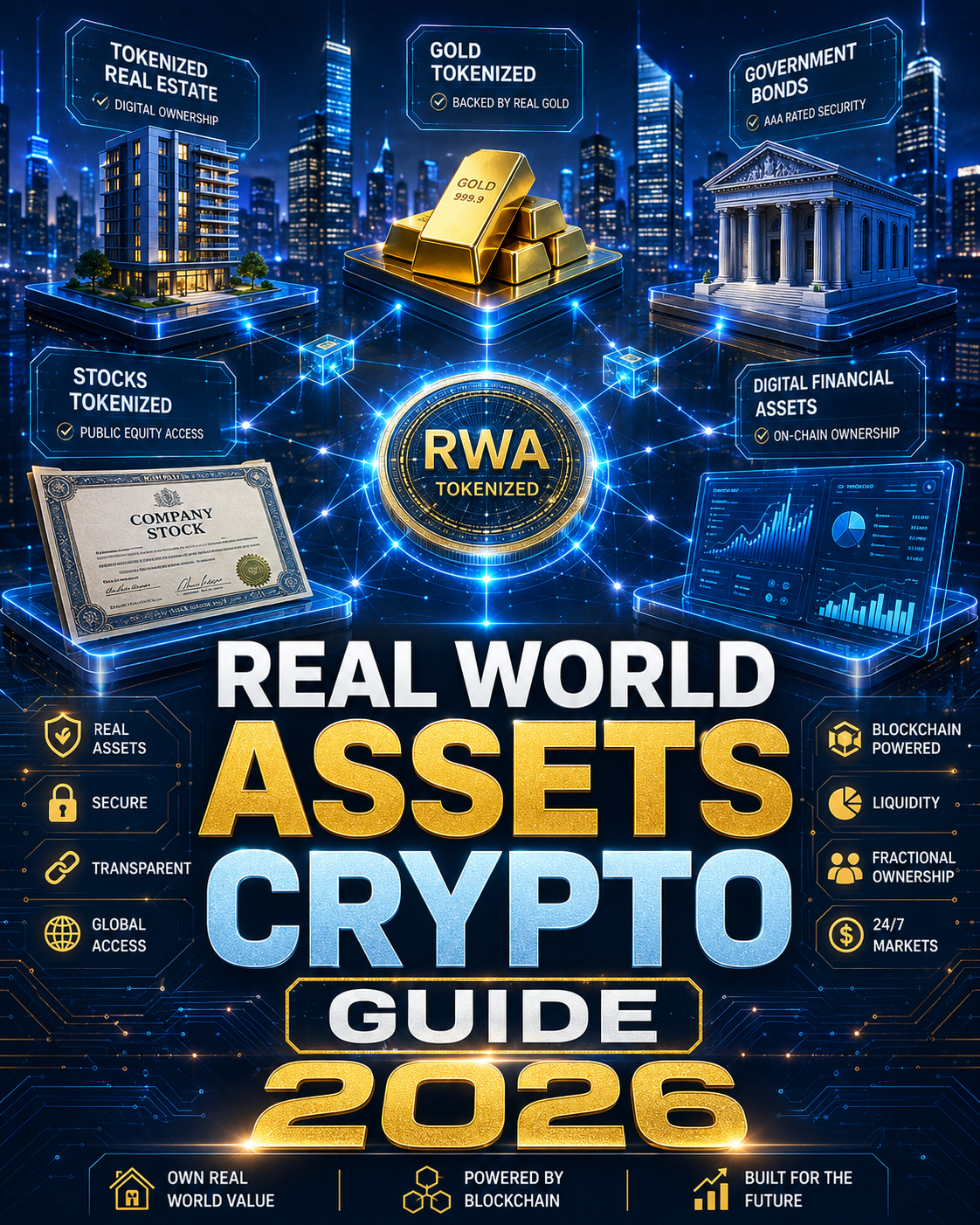
The cryptocurrency industry continues to evolve beyond digital currencies and decentralized finance. One of the fastest-growing sectors today is Real World Assets Crypto, often called RWA crypto. This emerging market connects physical assets with blockchain technology, creating new opportunities for investors and businesses.
As blockchain adoption increases, Real World Assets Crypto projects are attracting significant attention from institutions and retail investors. These projects allow traditional assets such as real estate, bonds, commodities, and artwork to be represented digitally on blockchain networks.
In this guide, we explain how Real World Assets Crypto works, its benefits, risks, and why many experts believe it could become one of the most important blockchain trends in 2026.
What Is Real World Assets Crypto?
Real World Assets Crypto refers to the process of bringing physical or traditional financial assets onto blockchain networks through tokenization.
In simple terms, tokenization converts ownership rights of an asset into digital tokens. These tokens can then be traded, transferred, or managed using blockchain technology.
Examples of assets that can be tokenized include:
- Real estate properties
- Government bonds
- Corporate debt
- Gold and precious metals
- Fine art
- Stocks and securities
As a result, Real World Assets Crypto creates a bridge between traditional finance and decentralized finance.
Why Is Real World Assets Crypto Important?
Traditional assets often face challenges such as limited liquidity, high transaction costs, and complex ownership structures.
However, Real World Assets Crypto offers several advantages:
- Faster transactions
- Increased liquidity
- Global accessibility
- Improved transparency
- Reduced intermediaries
- Fractional ownership
Furthermore, blockchain technology allows assets to be traded around the clock without many of the restrictions found in traditional markets.
How Does Asset Tokenization Work?
Asset tokenization is the foundation of Real World Assets Crypto.
The process typically follows these steps:
1. Asset Selection
A physical or financial asset is chosen for tokenization.
2. Legal Structure
Ownership rights are verified and connected to digital tokens.
3. Blockchain Issuance
Tokens representing ownership are created on a blockchain network.
4. Trading and Management
Investors can buy, sell, or transfer these tokens through approved platforms.
Consequently, ownership becomes more flexible and accessible.
Types of Real World Assets Crypto
Several categories are driving growth within the Real World Assets Crypto sector.
Tokenized Real Estate
Real estate remains one of the most popular use cases.
Instead of purchasing an entire property, investors can buy fractional shares through blockchain tokens.
As a result, property investment becomes more affordable for smaller investors.
Tokenized Bonds
Governments and corporations are exploring blockchain-based bonds.
These digital bonds can reduce paperwork while improving settlement speed.
Tokenized Commodities
Gold, silver, and other commodities can be represented through blockchain tokens.
Therefore, investors gain easier access to physical assets without handling storage or transportation.
Tokenized Private Credit
Private lending markets are increasingly adopting blockchain technology.
This trend allows investors to participate in lending opportunities through tokenized financial products.
Leading Real World Assets Crypto Projects
Several projects are helping expand the Real World Assets Crypto ecosystem.
Ondo Finance
Ondo Finance focuses on bringing traditional financial products onto blockchain networks.
The platform has become one of the leading names in the RWA sector.
Centrifuge
Centrifuge connects real-world assets with decentralized finance.
Businesses can tokenize invoices and other assets to access liquidity.
Maple Finance
Maple Finance specializes in institutional lending solutions powered by blockchain technology.
The platform plays a growing role within tokenized credit markets.
Goldfinch
Goldfinch enables decentralized lending without requiring traditional collateral structures.
Its model expands financial access to underserved markets.
Benefits of Real World Assets Crypto
There are many reasons why investors are paying attention to Real World Assets Crypto.
Improved Liquidity
Assets that are traditionally difficult to sell can become more liquid through tokenization.
Fractional Ownership
Investors can purchase small portions of expensive assets.
Greater Transparency
Blockchain technology provides transparent transaction records.
Global Investment Access
People from different countries can participate in tokenized asset markets.
Lower Costs
Automation reduces administrative and operational expenses.
Because of these advantages, many institutions are exploring blockchain-based asset tokenization.
Risks of Real World Assets Crypto
Despite its potential, Real World Assets Crypto also carries risks.
Common risks include:
- Regulatory uncertainty
- Market volatility
- Custody concerns
- Legal complexities
- Smart contract vulnerabilities
Therefore, investors should carefully research each project before investing.
Real World Assets Crypto and DeFi
One of the most exciting developments is the integration of Real World Assets Crypto with decentralized finance.
Tokenized assets can be used in DeFi applications such as:
- Lending
- Borrowing
- Yield generation
- Liquidity pools
Consequently, investors gain access to new financial opportunities while maintaining exposure to traditional assets.
The Future of Real World Assets Crypto
Many analysts believe Real World Assets Crypto could become a trillion-dollar market over the next decade.
Major financial institutions are already exploring tokenized securities, digital bonds, and blockchain-based investment products.
Furthermore, advancements in regulation and infrastructure may accelerate adoption.
As blockchain technology matures, Real World Assets Crypto is expected to play a major role in connecting traditional finance with decentralized ecosystems.
How to Choose Real World Assets Crypto Projects
Before investing, consider the following factors:
- Team reputation
- Regulatory compliance
- Asset backing
- Security measures
- Liquidity levels
- Long-term adoption potential
Additionally, investors should evaluate the transparency of each project’s tokenization process.
Ondo FinanceCentrifugeEthereum